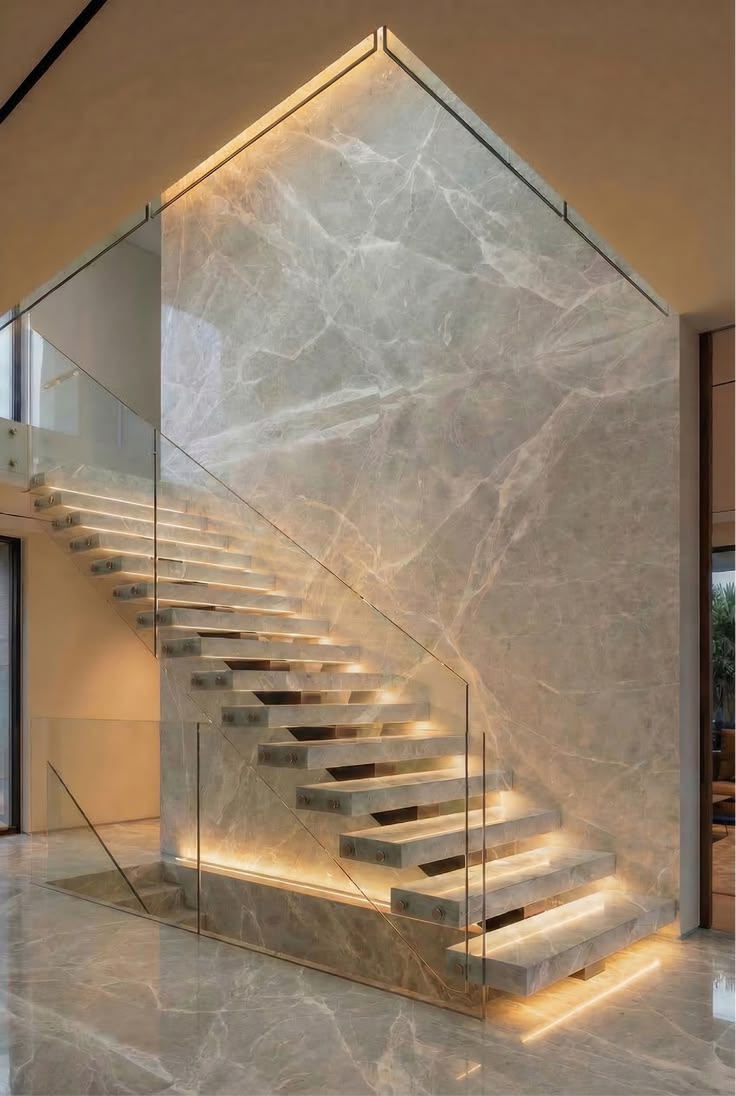
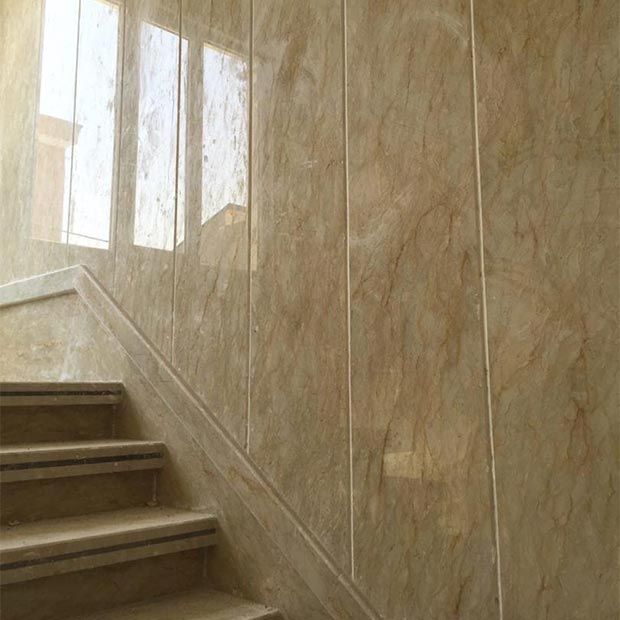
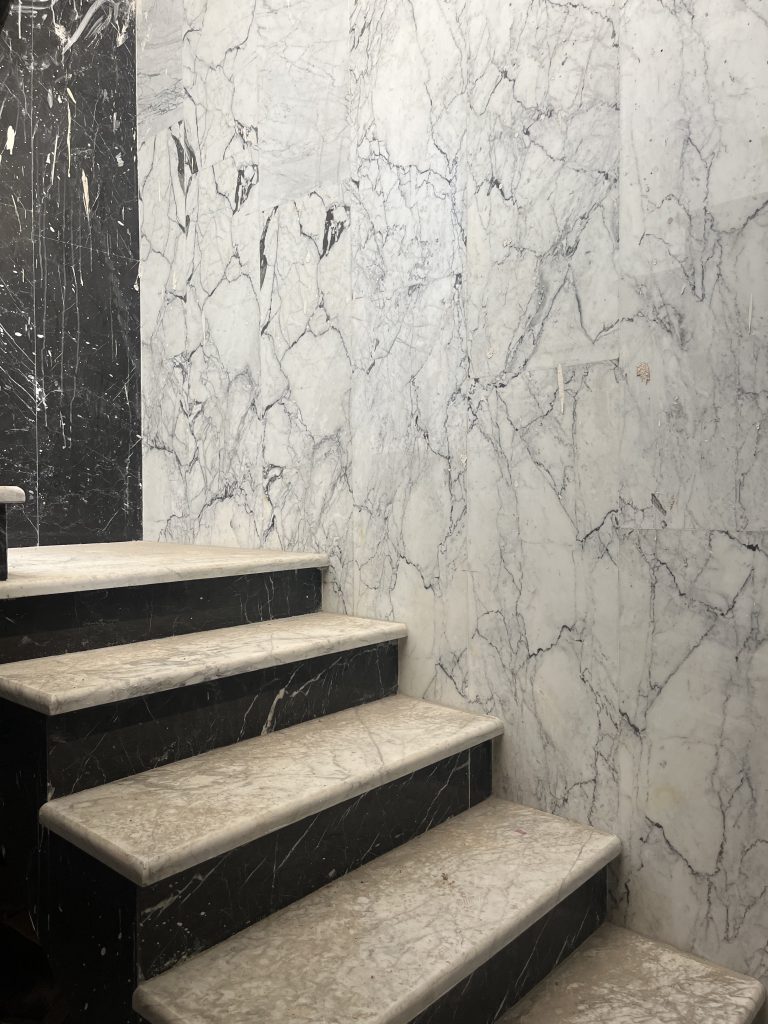
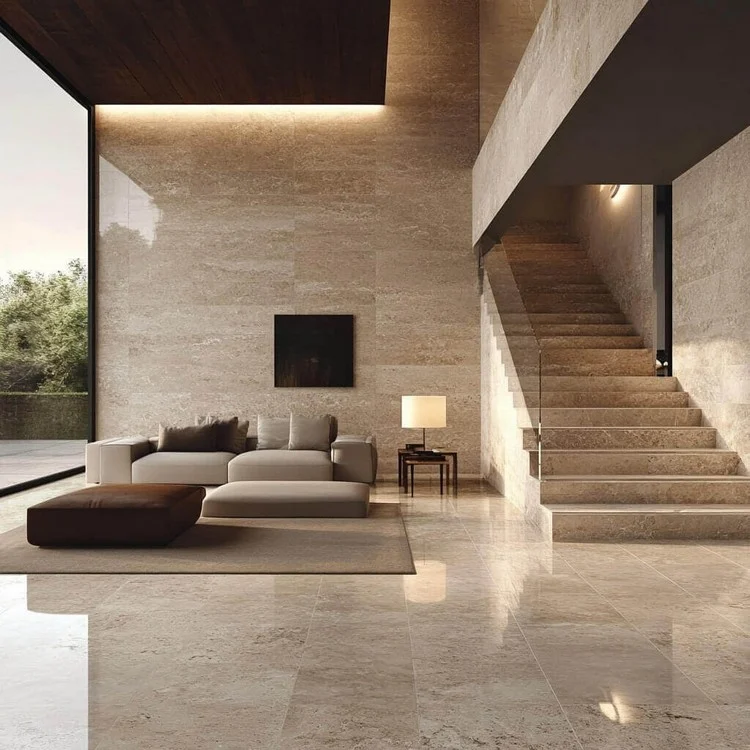
Staircases are among the most heavily trafficked areas of a building. Consequently, the stone used for steps must possess high durability and quality to withstand frequent use without suffering premature wear. It is also crucial that the selected stone is suitable for and compatible with the local climate. Choosing the right stone for both interior and exterior staircases can lend a stylish, modern aesthetic to the building while ensuring long-lasting performance without a decline in quality.
Important characteristics of stair stone:
Since stair stone is exposed to water and chemical substances, it should not have a high water absorption rate. Otherwise, over time, the minerals within the stone will dissolve, leading to efflorescence, a loss of luster, and the formation of permanent stains on the surface.
Advantages of using stone for staircases:
1) Sound insulation 2) Heat resistance 3) High durability 4) Striking aesthetics
Selecting the standard for stair treads:
Stones intended for interior use should be beautiful, refined, and translucent, whereas stones for exterior use must possess high resistance to atmospheric conditions, abrasion, and slipperiness. Typically, the standard thickness for these stones is 3 centimeters to ensure greater durability.
The best types of stair stone:
- Granite: Highly resistant to abrasion, impact, heat, and moisture.
- Marble: It offers excellent resistance to fire, impact, and abrasion, and creates a luxurious appearance.
- Travertine stone: Cost-effective, featuring natural cavities that allow for resin absorption and increased strength.
- Marble: Its lustrous appearance, resistance to weathering, and hypoallergenic nature make it an ideal choice for luxury spaces.