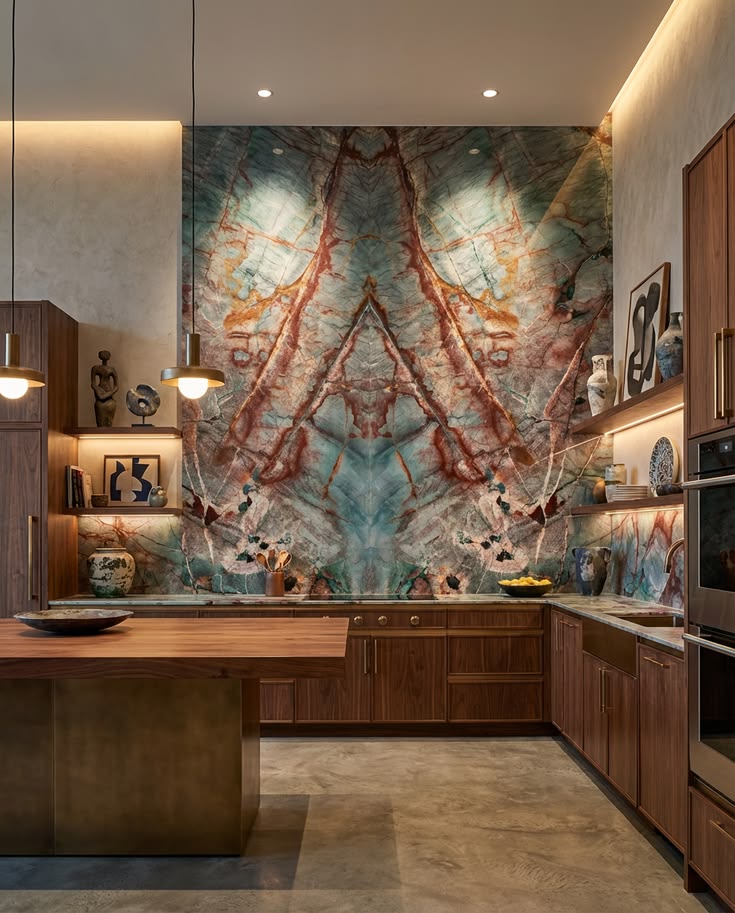
Book-matched and four-matched stone slabs

Book-matched and four-matched stone slabs

BOOK MATCHED STONE

Book-matched and four-matched stone slabs

In the stone book-matching process, stone slabs or tiles are cut and numbered according to a precise, organized pattern. The numbering is typically done in pairs or sets of four, allowing the slabs to be arranged side-by-side to form a larger, cohesive composition. In this method—similar to the “book-matching” technique…

In the stone book-matching process, stone slabs or tiles are cut and numbered according to a precise, organized pattern. The numbering is typically done in pairs or sets of four, allowing the slabs to be arranged side-by-side to form a larger, cohesive composition.

In this method—similar to the “book-matching” technique used for stone slabs, where patterns such as a butterfly motif or the continuous, symmetrical designs of a carpet are created—the stone’s veins and streaks are paired together.

In fact, if the first cut sheet is sanded on one side, the adjacent or side sheet must be sanded on the opposite side.

In other words, this underscores the need for grinding and polishing operations on both the front and back of the stone.

When two slabs are placed side-by-side, the arrangement is known as “book-match,” whereas if four slabs are combined to form a frame, it is called “four-match.” This technique creates a unique, artistic aesthetic when using stone slabs.


PORTFOLIO

Some portfolio samples Book-matched and four-matched stone slabs

We Are Online!

Request a Free Consultation

If you need our services and are looking for expert advice from our engineering team, you can fill out the consultation form to get in touch with our specialists.
faq

Frequently Asked Questions

Answers to your most frequently asked questions

Yes, we offer sales both in-person and via online orders.
As a standard, five stone balusters should be used.
For available products, we immediately issue a shipment request, and loading begins as soon as the carrier secures a vehicle—typically within one to three business days.
Calculating stone tonnage is based on experience and is typically accurate within a very narrow margin of error. For instance, 26 to 28 square meters of travertine weigh one tonne, while 19 to 22 square meters of marble weigh one tonne. Regarding stair treads—which are predominantly made of marble (marmerit) or granite and are 3 cm thick—12 to 14 square meters correspond to one tonne.
You can stay informed about discounts and new products by subscribing to the newsletter.

Are you ready to build your dream home?

Over the years, we have gained the trust and satisfaction of our clients through numerous and diverse projects. From residential buildings to public and industrial projects, we have managed to excel in every field we operate in.