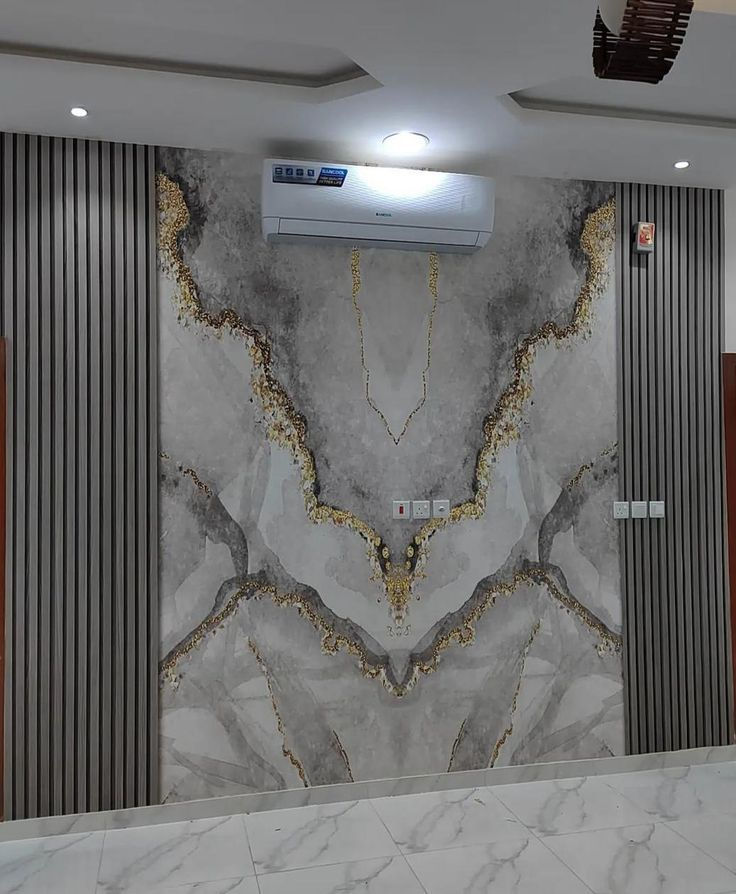
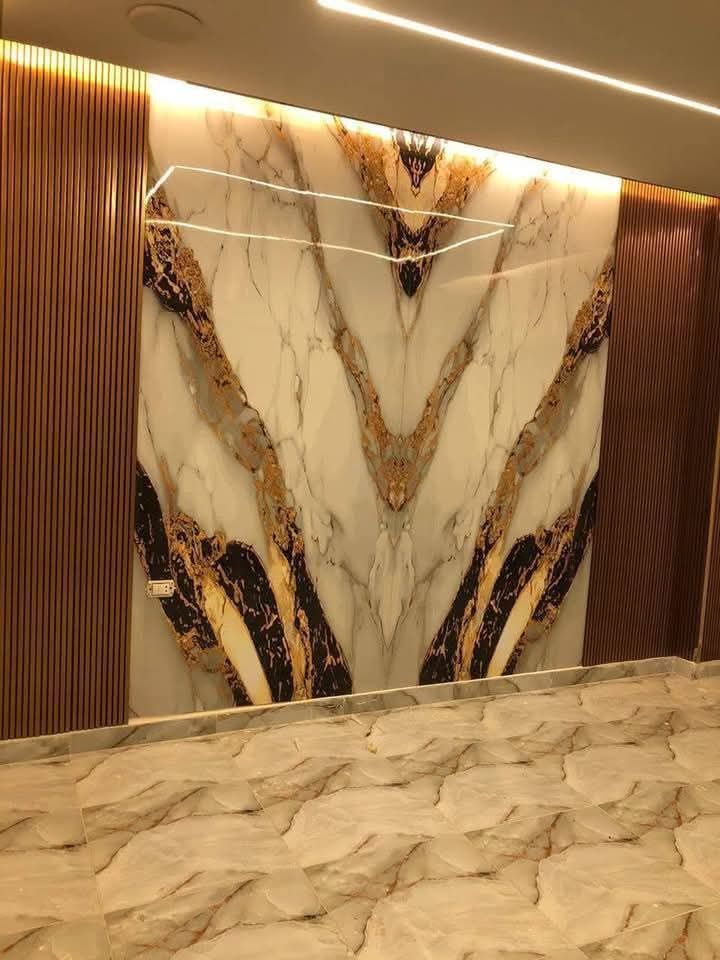
Stone slabs are a type of stone product cut into large sheets. They are produced from various stone types, including marble, granite, crystalline stone, and travertine. The advantages of using stone slabs include superior strength, stunning aesthetics, reduced waste, cutting precision, and the ability to create “book-matched” and “four-matched” patterns. Stone slabs are utilized not only in building construction but also in the design of interior and exterior spaces. This production method has expanded the use of stone in the construction industry, making it a popular choice due to its aesthetic appeal and practical qualities.
Stone slab cutting thickness:
It is typically around 2 cm thick, though in some cases it can reach 3 cm; this thickness plays a role in determining the stone slab’s ultimate use and application. Improvements made to traditional processing methods have also enhanced the stone’s longevity.
Stone slabs come in various types, including: 1) Marble (Marmarit) 2) Marble (Marmar) 3) Granite 4) Travertine 5) Traonyx 6) Crystalline Marble (Chini).
Characteristics of stone slabs:
1. Beauty and visual appeal
2. Durability and Longevity
3. Reduction of breakage and shattering
Advantages of using stone slabs:
The use of stone slabs is highly favored for several reasons. These stones are appealing due to their superior durability and stunning beauty. Furthermore, advantages include reduced waste during production, high precision and quality in cutting, and superior quality compared to standard stone tiles.
Ease of transport and loading, the ability to select stone tailored to project requirements, the potential for creating book-matched and four-matched patterns, and suitability for backlighting make this type of stone an ideal choice for various projects.