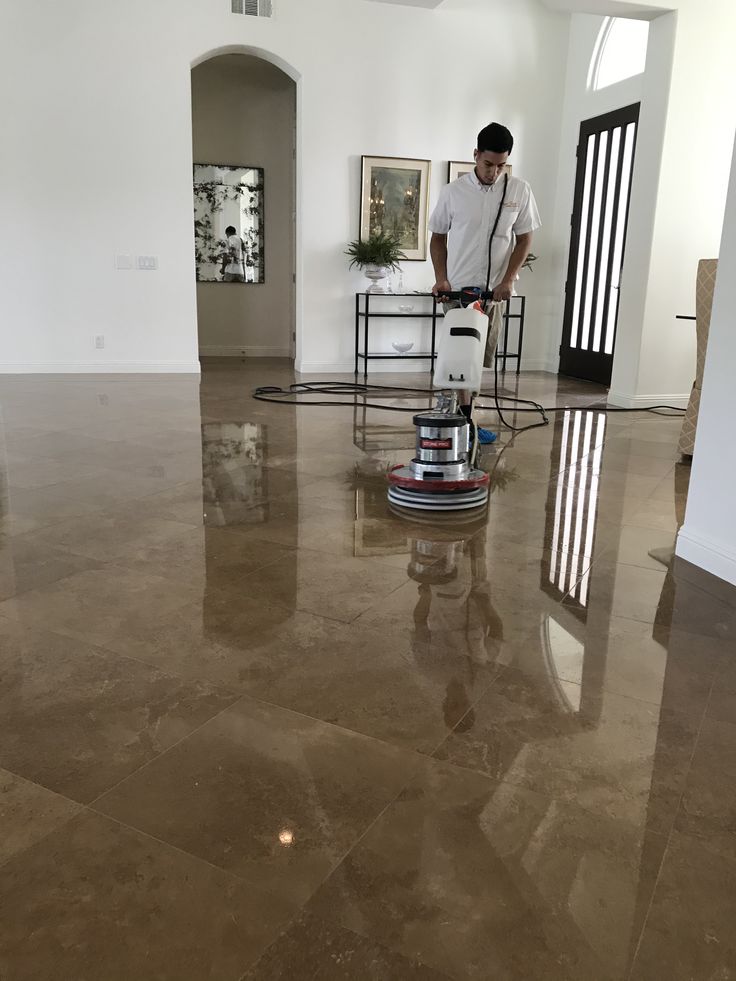
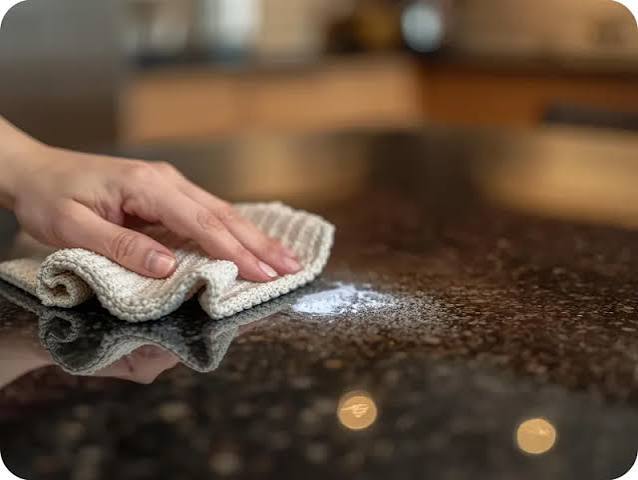
Natural stone is a popular choice for flooring, but proper maintenance is essential to preserve its beauty, luster, and quality over time. Factors such as the type of stone, its porosity, and the location of use play a significant role in determining the appropriate maintenance method.
1. Regular cleaning of stone flooring
Dust and fine particles can accumulate on the stone surface over time, causing it to become dull. It is best to clean stone floors regularly with a broom or a soft mop.
For cleaning, use water and detergents suitable for stone.
2. Do not use acidic substances.
One of the most common mistakes is using acidic substances to clean stone.
Substances such as hydrochloric acid, vinegar, and certain acidic descalers can damage the surface of some natural stones—particularly calcareous stones like marble and travertine—causing them to become dull or altering their appearance.

3. Clean up spills immediately.
Spilling substances such as tea, coffee, oil, soft drinks, or food onto the stone can cause stains, especially if the stone is porous.
The sooner the stain is removed, the less likely it is to penetrate the stone.
4. Avoid dragging heavy objects across the floor.
Dragging furniture, tables, chairs, and heavy objects across stone can cause scratches and surface damage.
It is best to use protective pads under the legs when moving furniture or appliances.
5. Watch out for sand and hard particles.
Sand and grit particles brought into the building on shoes can act like an abrasive on the stone surface.
Using a doormat at the building entrance is one of the simplest ways to reduce this damage.
6. Control water and moisture.
In areas such as bathrooms, kitchens, and building entrances, moisture can affect the appearance of certain types of stone.
As much as possible, do not allow water to remain on the stone’s surface or in its seams for an extended period.
7. Use of protective covering
For certain types of stone, the use of a sealer or a specialized stone protectant can help reduce water absorption and susceptibility to staining.
Of course, the type of protective product must be suitable for the stone’s material and its intended location.
8. Each stone requires a different maintenance method.
This point is crucial when selecting stone. For instance, the maintenance methods for marble, travertine, granite, and crystalline limestone (often referred to as “Chinese stone” in Iran) are not necessarily the same.
Therefore, the specifications of the stone must be checked before using any cleaning or protective agent.

Common Mistakes in Stone Floor Maintenance
Use of hydrochloric acid and acidic substances
Frequent use of very strong detergents
Leaving water on the stone surface
Neglecting oil and food stains
Dragging heavy objects across the floor
Using inappropriate materials to polish stone
Use of a protective coating, regardless of the stone type.
Conclusion
To extend the lifespan and preserve the beauty of stone flooring, regular cleaning, the use of suitable detergents, the prevention of scratches, prompt stain removal, and moisture control are crucial. It is also advisable to identify the type of stone before using any chemical products.