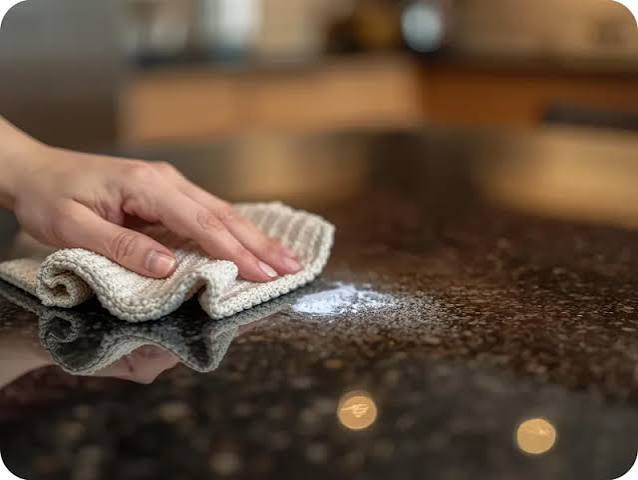
Stone cleaning Cleaning requires care and attention to the specific type of stone. Generally, you can clean stones using a mild soap-and-water solution, stone-specific cleaners, or natural agents like baking soda. However, be aware that some stones are sensitive to acid, making acidic products harmful to them. After cleaning, rinse the stone surface thoroughly and dry it. To maintain the stone’s shine, you can use a specialized stone polish. Always read the product label before use to ensure it is suitable for your specific type of stone. Some of the most common methods are outlined below.
Cleaning fluids
Various travertine cleaning agents are available on the market; these can be used to clean building materials based on the specific type of stone (such as marble, granite, porcelain, or travertine) and the nature of the stain or dirt. “Tide” (hand-wash detergent) is one such cleaner for stone and ceramic surfaces that typically does not cause damage. If the stone has yellowed due to contact with certain chemicals, specialized detergents—such as “HS” cleaner—are used, taking into account the stone’s composition and finish.

Polishing agents
If the stone has become dull or cloudy, various polishing agents—such as clear lacquer or stone polish—can be used to remedy this issue and clean the stone and ceramic surfaces. Some people apply polishing agents (such as gloss resins, nano-resins, or water-repellent resins) simultaneously while cleaning the stone and ceramic.
It is worth noting that most polishes available on the market may wear off and leave no trace after a period of time if used outdoors or in humid environments. Furthermore, not every type of polish is suitable for every kind of stone—particularly regarding travertine and white stones—and some may cause the stone’s surface to yellow over time. Therefore, it is essential to exercise care when selecting the type and brand of polish.
Stone cleaner / Stone descaler
Given that certain types of stone or ceramic may react to specific cleaning agents or descalers containing acidic or alkaline substances, the best cleaning method involves using nano-based or non-acidic products. Cleaning these surfaces with unsuitable agents—where acidic substances react with the material—can ruin their original appearance.
Non-acidic nanomaterials
Non-acidic nanomaterials (water-based nanomaterials) can be suitable for cleaning building stones. Moreover, this cleaning method is easy and generally does not damage the stone.

A variety of specialized brushes
Various types of brushes are available on the market that are recommended for cleaning stone and ceramic surfaces. As previously mentioned, the choice of method depends on the specific material; for instance, if the stone features a modern finish—such as a bush-hammered leather finish—specialized wire or plastic brushes should be used.
Other washing methods
There are other methods for washing and cleaning materials as well. For instance, if substances such as cement mortar have spilled onto the stone, the cleaning process differs; sharp scrapers designed for various types of stone are commonly used in such cases.
Why shouldn’t acidic cleaners be used to clean granite surfaces?
Under no circumstances should you use acidic cleaners to clean granite, as they cause damage and corrosion to the stone.
Should steel wool be used to clean stone and ceramic surfaces?
When cleaning various types of stone and ceramic surfaces, it is best to use a mop and cloth rather than abrasive or wire brushes to avoid dulling the finish or causing scratches.
What solution is best to use for polishing ceramic wall tiles?
First, wipe the ceramic surface with a cleaning cloth to remove any dust. Then, prepare a solution consisting of equal parts water and white vinegar. Use this mixture and a cleaning cloth to wipe down the wall tiles. Finally, rinse the tiles with water to ensure they are thoroughly clean and shiny.
What is the best ceramic polish?
White vinegar is the best polish for ceramic surfaces. Prepare a solution that is half water and half white vinegar, and clean the ceramic with this polishing solution.
What products should we use to make kitchen tiles shine?
Kitchen tiles are often covered in grease stains. A mixture of baking soda and dish soap is the perfect solution for eliminating these stains from stone and tile surfaces. Spray this mixture onto the tiles, let it sit for 10 to 15 minutes, and then thoroughly wipe them down with a damp cloth until they sparkle.